


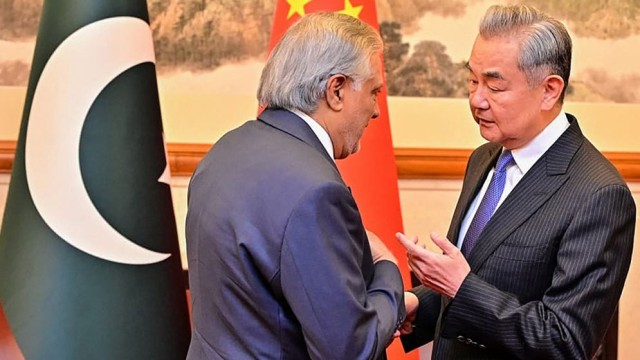
BEIJING, Apr 01 (V7N) — In a major diplomatic move to address the escalating war between the United States, Israel, and Iran, China and Pakistan have jointly proposed a five-point initiative for restoring peace and stability in the Gulf and Middle East region. The plan was unveiled following a high-level meeting in Beijing on Tuesday between Chinese Foreign Minister Wang Yi and Pakistan’s Deputy Prime Minister and Foreign Minister Mohammad Ishaq Dar.
The initiative represents the first coordinated effort by a global superpower (China) and a key regional mediator (Pakistan) to establish a formal roadmap for a ceasefire as the conflict enters its second month.
The Five-Point Framework:
-
Immediate Cessation of Hostilities: An urgent call for a ceasefire to prevent the conflict from spreading to new territories, alongside a demand for unhindered humanitarian access to all war-affected areas.
-
Protection of Non-Military Targets: Strict adherence to International Humanitarian Law (IHL). Both nations demanded an immediate end to attacks on civilians and critical infrastructure, specifically citing energy, desalination, power facilities, and peaceful nuclear plants.
-
Initiation of Peace Talks: Diplomacy is presented as the only viable solution. The plan calls for talks that safeguard the sovereignty and territorial integrity of Iran and its neighbors, with all parties committing to refrain from the use or threat of force during negotiations.
-
Security of the Strait of Hormuz: Recognizing the waterway as a vital global artery for energy and trade, the initiative calls for the restoration of "normal passage" and the safety of all commercial vessels and crews.
-
UN-Backed Peace Framework: Reaffirming the primacy of the United Nations Charter, the two countries proposed a long-term, comprehensive peace agreement based on multilateralism and international law.
Mediation and Geopolitical Friction
The joint statement marks Beijing’s formal entry into the "endgame" of the Gulf crisis. Foreign Minister Wang Yi expressed strong support for Pakistan’s role as a mediator, noting its unique position as a neighbor to Iran with established ties to the Trump administration.
However, the initiative faces immediate challenges. While Pakistan has been positioned by U.S. envoys as a conduit for a "15-point action list" for peace, the Iranian Consulate in Mumbai issued a sharp rebuttal on Tuesday, claiming that Tehran has not participated in direct talks via intermediaries and rejecting "unreasonable demands."
Furthermore, the call for "normal passage" in the Strait of Hormuz appears to be a subtle rejection of the "transit toll" system recently approved by the Iranian parliament. Despite these frictions, the China-Pakistan initiative has gained support from other regional powers, including Saudi Arabia, Turkey, and Egypt, who have expressed interest in a proposed peace summit in Islamabad.
END/SMA/AJ









Comment: