


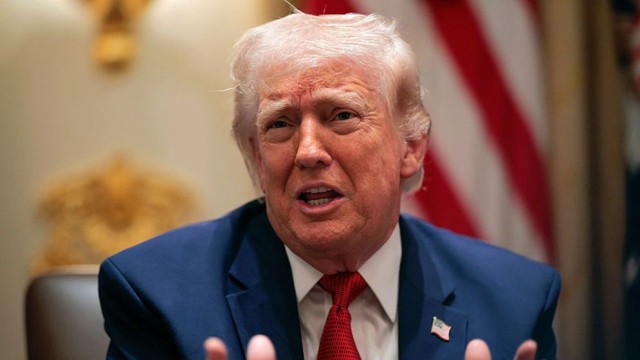
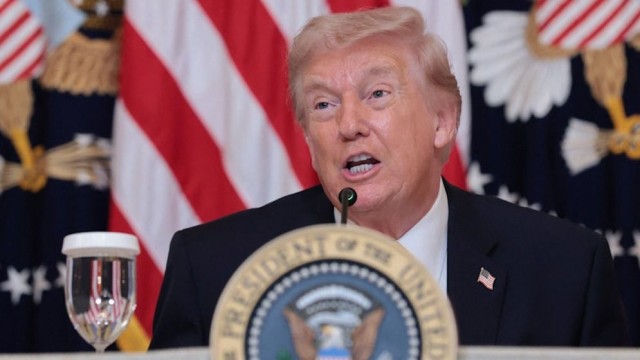
WASHINGTON, Mar 31 (V7N) — As the joint U.S.-Israeli military campaign against Iran enters its 32nd day, President Donald Trump has adopted a noticeably softer tone regarding the duration of the conflict. According to reports from CNN and other international outlets, the President has indicated a willingness to wind down military operations even if the strategic Strait of Hormuz remains partially obstructed.
This potential shift suggests a strategic pivot by the White House, prioritizing the "decimation" of Iran’s naval and missile capabilities over an immediate, high-risk mission to force the waterway open. While the move could leave Tehran with lingering influence over the transit route in the short term, the administration appears focused on concluding the current phase of hostilities within a four-to-six-week window.
Bessent: "Market is Well Supplied"
Contradicting fears of a total energy collapse, U.S. Treasury Secretary Scott Bessent struck a measured tone during an interview with Fox News on Monday, March 30. Despite oil prices surging past $115 per barrel in recent days, Bessent maintained that the global market is currently "well supplied."
The Treasury Secretary revealed that the U.S. is observing an increase in oil availability as several countries have reportedly reached quiet "arrangements" with Tehran to ensure a steady flow of crude. "Any additional supply is helpful at this point," Bessent noted, adding that the administration is leveraging its financial strength to sustain operations while seeking further support from Congress.
Long-Term Strategy for the Strait
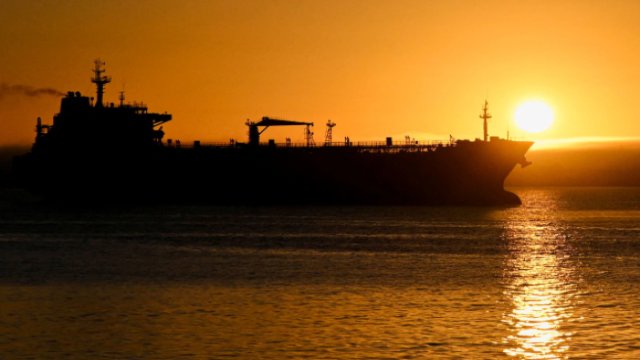
While President Trump hinted at a near-term ceasefire, Secretary Bessent outlined a firm long-term vision for the Strait of Hormuz. He asserted that the United States intends to "retake control" of the waterway over time to ensure permanent freedom of navigation.
"Over time, the U.S. is going to retake control of the Straits... whether it is through U.S. escorts or a multinational escort," Bessent stated.
This dual-track approach—scaling back active strikes while preparing for a sustained naval presence—comes as Iran’s parliament recently moved to approve a controversial "toll system" for vessels transiting the strait. The U.S. has dismissed these plans, with Trump previously issuing a "Truth Social" warning that failure to keep the strait "open for business" could result in the total destruction of Iran’s energy infrastructure.
END/SMA/AJ
















Comment: