


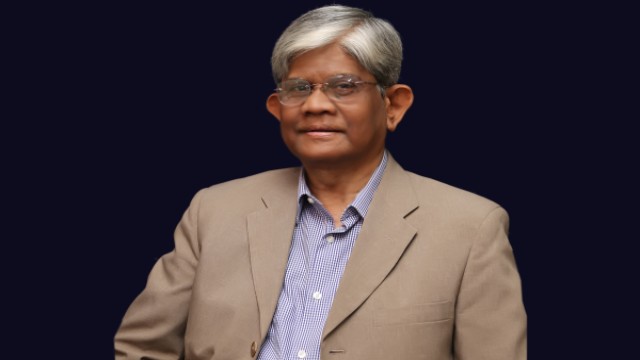
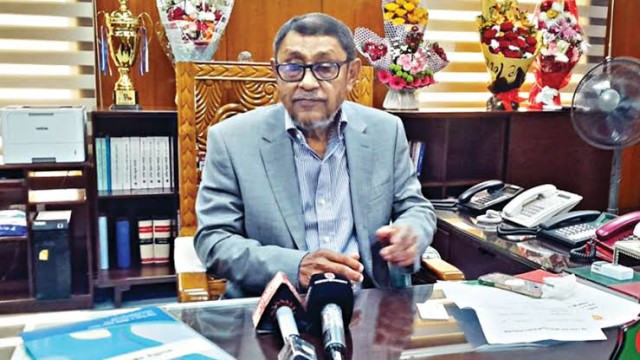
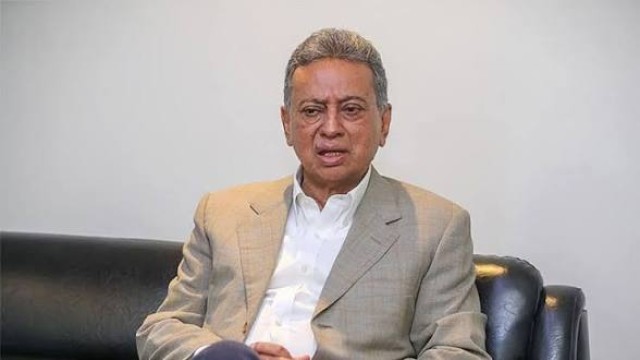
DHAKA, Feb 9, (V7N) – Finance Adviser Dr Salehuddin Ahmed on Monday said Bangladesh’s economy is not in a critical condition at present, though it continues to face significant challenges that will require sustained reforms, improved coordination and strong political commitment from the next elected government.
Speaking at a discussion titled “Macroeconomic Insights: An Economic Reform Agenda for the Elected Government” at a city hotel, the adviser said the country has so far managed to maintain overall macroeconomic stability despite facing both domestic and global pressures.
“The economy was under serious stress, but we are managing the situation. The challenges remain and they should not be underestimated,” he said, adding that Bangladesh has avoided a deep economic crisis through cautious policy management.
The event was jointly organised by the Policy Research Institute of Bangladesh (PRI) and Australia’s Department of Foreign Affairs and Trade (DFAT). PRI Chairman Dr Zaidi Sattar presided over the programme.
Former BIDS Director General Dr KAS Murshid and Australia’s Deputy High Commissioner to Bangladesh Clinton Pobke spoke as special guests. PRI Principal Economist Dr Ashikur Rahman presented the keynote paper, while CPD Executive Director Dr Fahmida Khatun and Policy Exchange Bangladesh Chairman and CEO Dr M Masrur Reaz joined as panelists. PRI Director Dr Ahmad Ahsan delivered the closing remarks.
Dr Salehuddin said Bangladesh has shown resilience amid global shocks such as post-pandemic disruptions, geopolitical tensions, energy price volatility and tighter global financial conditions. Prudent macroeconomic management, he noted, has helped the country navigate a difficult period.
Addressing concerns over inflation, balance-of-payments pressure and fiscal stress, the adviser said such challenges are being faced by many countries worldwide. “The key issue is how effectively these problems are addressed through reforms and stronger institutions,” he said.
He added that the interim government has prioritised stabilising the macroeconomy, maintaining fiscal discipline, managing foreign exchange pressures and ensuring continuity of essential economic activities.
“We have tried to take balanced decisions so that the economy continues to function while also protecting vulnerable groups,” he said.
Highlighting revenue mobilisation as a major structural challenge, Dr Salehuddin pointed out that Bangladesh’s tax-to-GDP ratio remains low compared to similar economies. He stressed the need for comprehensive tax reforms, widening the tax base and improving compliance to support long-term economic stability.
END/AIJ/RH

















Comment: