


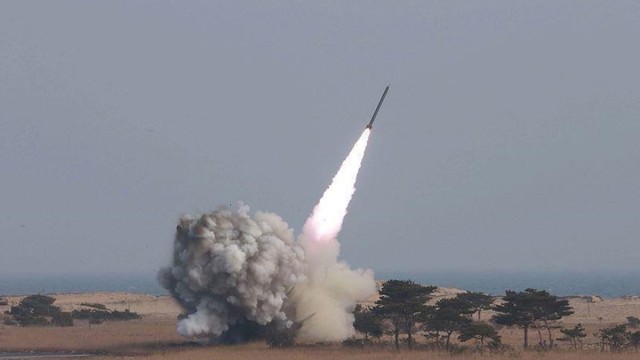
MAR 29 (V7N) - In a significant development on Saturday, Yemen’s Iran-backed Houthi rebels entered the month-old Middle East war, claiming responsibility for two missile attacks on Israel. This new involvement of the Houthis in the conflict raises concerns about the war spreading to the Red Sea and potentially worsening regional instability.
The Houthi group had remained largely uninvolved in the recent escalation until now, despite their previous actions during Israel's war in Gaza, where they had attacked shipping in the Red Sea and Gulf of Aden. These earlier attacks had forced international shipping companies to reroute their vessels, incurring costly detours.
On Saturday, a Houthi spokesperson announced that they had launched "a barrage of cruise missiles and drones" targeting vital military sites in Israel. This new front of the war intensifies fears of the conflict spreading beyond its current borders, as the Red Sea and surrounding waterways are crucial for global trade and energy shipments.
Saudi Arabia, which has been heavily involved in the region, has already rerouted much of its oil exports through the Red Sea to avoid the Strait of Hormuz. Iran has previously threatened to block this vital shipping route, further complicating the situation.
Israel Strikes on Iran and US Threats
Meanwhile, Israel continued its airstrikes on Iranian targets, hitting the headquarters of Iran’s Marine Industries Organisation in Tehran. The Israeli military claimed the facility developed a wide range of naval weaponry. The strikes on Iran's military infrastructure have intensified, with Israeli officials indicating that additional critical targets will soon be hit.
In response, Iran’s Revolutionary Guard issued a stern warning, threatening to target U.S. universities in the Middle East if the U.S. continued its military operations alongside Israel. The Revolutionary Guard’s threats targeted campuses like Texas A&M in Qatar and New York University in the UAE, where several American institutions operate.
Iran also continues to retaliate with missile and drone strikes in the region. Iranian-backed militias in Iraq have been involved in attacks, including a drone strike on the residence of Kurdish regional leader Nechirvan Barzani, which the U.S. condemned as an assault on Iraq’s sovereignty.
Diplomatic Efforts and Escalation
In the midst of the conflict, diplomatic efforts have been ramping up. Pakistan has emerged as a mediator, hosting foreign ministers from Saudi Arabia, Turkey, and Egypt in Islamabad for talks aimed at de-escalating the crisis. Iran’s President, Masoud Pezeshkian, expressed gratitude for Pakistan’s mediation efforts, and Germany’s Foreign Minister Johann Wadephul also indicated that a direct meeting between the U.S. and Iran was expected to take place in Pakistan soon.
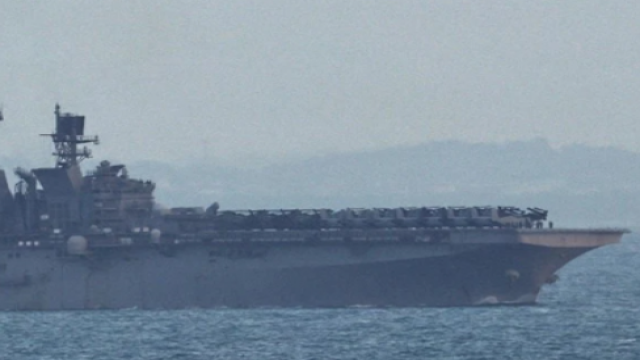
Despite these diplomatic efforts, military tensions continue to rise. The Pentagon has been preparing plans for weeks of ground operations in Iran, although U.S. President Donald Trump has yet to authorize any deployment of ground troops. Reports suggest that U.S. military operations could target key locations, including Kharg Island and sites near the Strait of Hormuz.
Impact on Red Sea Shipping and Regional Economy
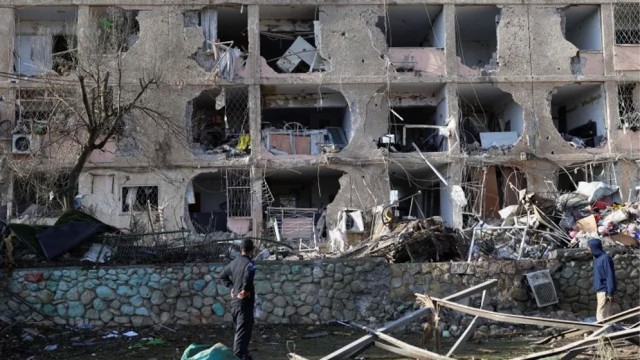
The ongoing war has already had a significant impact on global shipping and the regional economy. The Strait of Hormuz remains a key flashpoint, with many Gulf shipments rerouted through Oman's Salalah port. However, operations at Salalah were temporarily suspended after a drone attack by Iran-backed forces. Iranian missile and drone strikes have also caused significant damage in the Khalifa Economic Zone in Abu Dhabi, injuring six people and causing widespread destruction at Emirates Global Aluminium.
Air travel has also been disrupted, with Iranian strikes hitting airport facilities in Kuwait and Iraqi Kurdistan. Meanwhile, the U.S. has condemned a drone attack on the Kurdish leader’s residence in Erbil, Iraq, blaming Iranian militia proxies.
Casualties and War Crimes in Lebanon
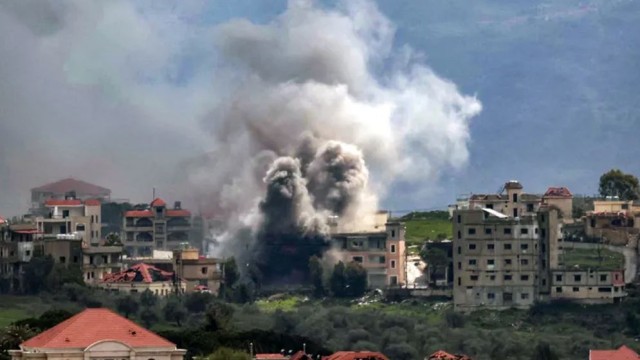
The conflict has led to devastating losses in Lebanon as well. On Saturday, Israeli airstrikes killed three journalists in southern Lebanon, including Ali Shoeib, a prominent war correspondent for Hezbollah’s Al Manar network. The Israeli military accused Shoeib of working within Hezbollah under the guise of journalism. Lebanese authorities condemned the killings as war crimes, and President Joseph Aoun and Prime Minister Nawaf Salam called for accountability.
In addition to the journalists, Israeli raids on southern Lebanon resulted in the deaths of nine paramedics, including Hezbollah-affiliated medical personnel, further escalating tensions in the region.
Ukrainian Support to the Gulf States
Ukraine’s President Volodymyr Zelensky, currently visiting the Gulf region, has offered his military expertise to help defend against Iranian strikes. Zelensky has signed anti-drone cooperation agreements with Saudi Arabia, Qatar, and the UAE, bolstering these nations’ defense against Iranian drone and missile attacks.
As the conflict continues to spread, the global community faces increasing pressure to intervene diplomatically to prevent further escalation and loss of life. The war in the Middle East has already caused severe economic disruptions, and with the involvement of additional actors like the Houthis and the escalating U.S.-Iran tensions, the situation remains dire.
END/WD/RH/















Comment: