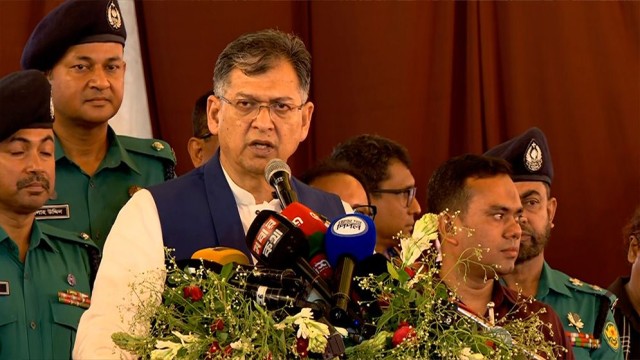
Dhaka, Dec 16 (V7N) — Jamaat-e-Islami Ameer Dr. Shafiqur Rahman on Tuesday said the Liberation War of 1971 became inevitable due to prolonged discrimination by the ruling class of Pakistan against the people of East Pakistan, particularly following the 1970 general elections.
He made the remarks while speaking at the inauguration ceremony of a Youth Marathon at Suhrawardy Udyan in the capital on the occasion of the Great Victory Day.
Dr. Shafiqur Rahman said that in 1947, people of this region revolted against what he termed the discriminatory rule of “Azadi Pakistan,” and the situation eventually led to war. He claimed that all sections of the people united and participated in the Liberation War.
Paying tribute to the martyrs of the Liberation War, the Jamaat Ameer alleged that after independence, one group claimed ownership of the war’s legacy, while others were deprived of their rights. He said multiparty democracy was destroyed, basic human rights were curtailed, and what he described as “repressive forces” were created in the name of security, leading to a “horrific situation” in the country.
Referring to the famine of 1974, he alleged that foreign relief supplies were sold in advance, resulting in the deaths of hundreds of thousands of people. He claimed that Anjuman Mofidul Islam handled burials in Dhaka during that period and criticized the then ruling party for what he termed misgovernance. He further said questions should be raised as to why sections of the patriotic armed forces later took a stand, placing responsibility on the Awami League.
Dr. Shafiqur Rahman alleged that during its three tenures in power, the Awami League presided over violence and repression. He mentioned incidents including political violence in the 1990s, the 2009 BDR mutiny, events at Shapla Chattar, and an alleged assault in Subarnachar, Noakhali, claiming these reflected authoritarian practices.
He further alleged that political opponents were forced to flee due to killings, rape, and repression, adding that even in exile they continued to face threats. Referring to an attack on Jamaat leader Osman Hadi, he prayed for his recovery.
Calling for a new political culture, the Jamaat Ameer said the country must move away from what he described as “rotten politics of the past” and embrace politics based on independence, sovereignty, justice, and opposition to corruption and extortion.
He said Bangladesh’s future would be led by the youth and claimed that conspiracies would fail in the face of youth unity. Announcing February 12 as a significant date for what he termed a “new Bangladesh,” he urged the administration and the Election Commission to act impartially and fulfill their constitutional responsibilities without favoritism.
END/SMA/AJ