


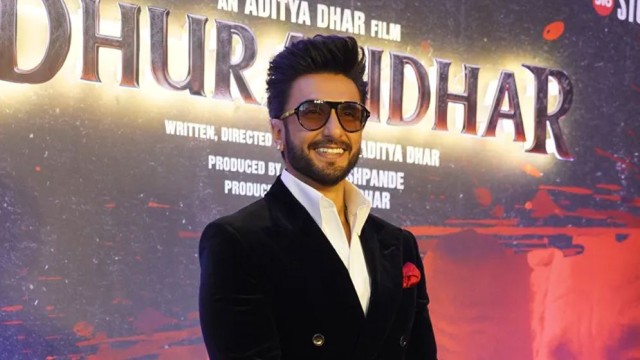
Mumbai, December 16 (V7N) — Bollywood’s new spy thriller Dhurandhar has generated both commercial success and heated debate in India and Pakistan, with questions raised over its story, presentation, and political messaging.
Released on December 5, the 3-hour-32-minute film depicts a bloody spy world centered around Indo-Pakistan tensions, featuring gang conflicts, intelligence operations, and violence. Its release coincides with ongoing sensitivities following heightened tensions between India and Pakistan earlier this year, including an attack on a tourist resort in Pahalgam, Indian-administered Kashmir.
Directed by Aditya Dhar, Dhurandhar follows Indian intelligence officer Ranveer Singh, tasked with dismantling a criminal network in Karachi, Pakistan. Sanjay Dutt plays the antagonist, portrayed as a symbolic figure of the Pakistani establishment. Akshaye Khanna and R. Madhavan appear as a gangster and a Delhi-based intelligence officer, respectively. The narrative follows a classic cat-and-mouse structure, balancing field operations with political strategy.
Controversy in Pakistan
The film has been criticized in Pakistan for its depiction of Karachi, particularly the Lyari area. Nida Kirmani, sociologist at Lahore University of Management Sciences, said the film’s portrayal is fictionalized, emphasizing violence as the city’s defining feature while misrepresenting its culture, language, and infrastructure.
Additionally, Pakistan People’s Party (PPP) leaders have filed a court case alleging that the film uses former Prime Minister Benazir Bhutto’s image without permission and portrays PPP leaders as terrorist sympathizers. Critics argue that linking local Lyari gangs to India-Pakistan geopolitics is historically inaccurate, as these gangs operated only at the local level.
Mumbai-based critic Mayank Shekhar noted that none of the filmmakers or actors have visited Karachi, resulting in a depiction reminiscent of Hollywood’s stereotypical “third world city” imagery.
Reception and Criticism in India
While Dhurandhar has been commercially successful in India and popular among the Indian diaspora, it has faced criticism here as well. The family of martyred Indian Army officer Major Mohit Sharma filed a case in the Delhi High Court, alleging that his life story was used without permission. Filmmakers insist that the film is entirely fictional, though audio clips and news footage of real attacks blur the line between fact and fiction.
Critics have also highlighted a growing trend in Bollywood of portraying minorities negatively, particularly Muslims, as terrorists, which contributes to social marginalization. Similar controversies arose with previous films like Article 370 and Kerala Story, which were praised by Prime Minister Narendra Modi but criticized as propaganda by opponents. Some critics of Dhurandhar have reportedly faced online harassment, prompting condemnation from the Film Critics Guild of India.
Overall, Dhurandhar has transcended its genre as a spy thriller, sparking debates about historical representation, India-Pakistan relations, and the portrayal of minorities in mainstream Indian cinema.
END/SMA/AJ

























Comment: