


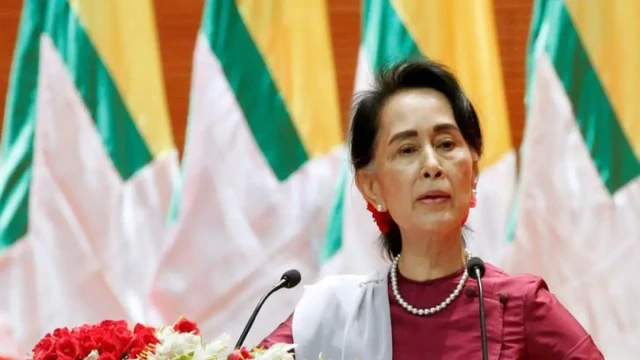
Yangon, Dec 16 (V7N) – Myanmar’s detained pro-democracy leader and Nobel Peace Prize laureate, Aung San Suu Kyi, is reportedly in poor health, raising growing concern among her family, supporters, and the international community. Suu Kyi, now 80 years old, has been held in detention since the military coup in February 2021 that toppled the country’s elected government. No reliable information about her physical condition or treatment is currently available.
Her son, Kim Aris, expressed deep anxiety over the lack of communication with his mother. In an interview with Reuters, he said, “I have had no contact with my mother for several years. I worry that if something happens to her, I may never even learn about it.” Aris described the uncertainty surrounding her condition as a constant source of fear and distress for him and his family.
The prolonged detention and lack of information have sparked international concern. Human rights organizations, pro-democracy activists, and foreign governments have repeatedly called on the Myanmar military junta to provide updates on Suu Kyi’s health and ensure she receives proper medical care.
Suu Kyi, who won the Nobel Peace Prize in 1991 for her nonviolent struggle for democracy and human rights, remains a symbol of resistance for Myanmar’s pro-democracy movement. Her detention has been widely condemned, and international pressure continues to mount on the military government for her release.
Observers note that Suu Kyi’s deteriorating health and restricted access to family members highlight broader human rights concerns in Myanmar, where political prisoners face ongoing mistreatment, limited legal rights, and inhumane detention conditions.
Experts stress the urgency of allowing independent medical examinations and family visits to prevent further deterioration of her health. “Her well-being is not just a personal matter but a test of the junta’s adherence to basic human rights,” said one human rights advocate.
As Myanmar’s political crisis continues, Aung San Suu Kyi’s detention and health remain central to international discussions on the country’s future, democracy, and accountability for past and ongoing abuses.
END/WD/SMA/











Comment: