Rajshahi, Oct 25 (V7N) – Noise pollution in Rajshahi city has reached alarming levels, with measurements at two busy intersections exceeding 100 decibels, significantly above the permissible limits under Bangladesh’s Noise Pollution Rules, 2025.
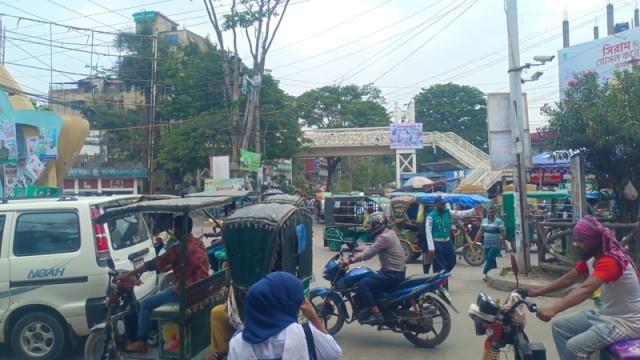
A field assessment conducted on Saturday found an average peak noise level of 101.5 decibels at Railgate and 102.6 decibels at Laxmipur intersection, raising fresh concerns about the impact of excessive traffic noise on public health and urban life.
The measurements were conducted by the Barendra Environment Development Voluntary Organisation with support from Barind Environment. Noise levels were measured at Railgate from 10am to 10:30am and at Laxmipur intersection from 10:30am to 11am.
Measurements taken at the same locations at approximately the same times last year recorded peak average levels of around 97 decibels at both intersections, indicating a further increase over the past year.
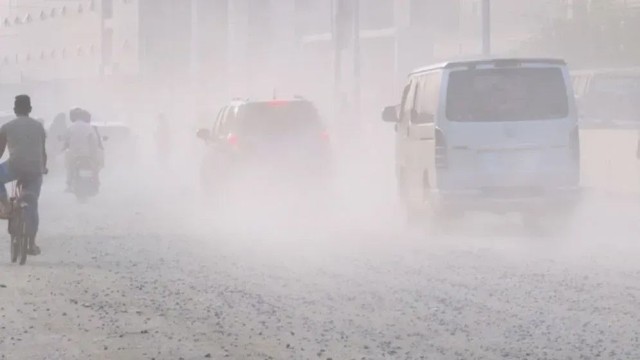
Unnecessary honking by buses, trucks, motorcycles and battery-powered auto-rickshaws is among the major contributors to the problem. Traffic congestion and inadequate traffic management have also intensified the noise in busy parts of the city.
At Railgate, the sound of vehicles frequently overwhelms conversations among pedestrians and people standing outside nearby shops. A similar situation prevails at Laxmipur intersection, where traffic noise continues despite the presence of hospitals and other healthcare facilities.
Environmental activists warn that prolonged exposure to excessive noise can damage hearing and contribute to stress, irritation and sleep disturbances. The effects are particularly concerning in areas around hospitals, educational institutions and residential neighbourhoods.
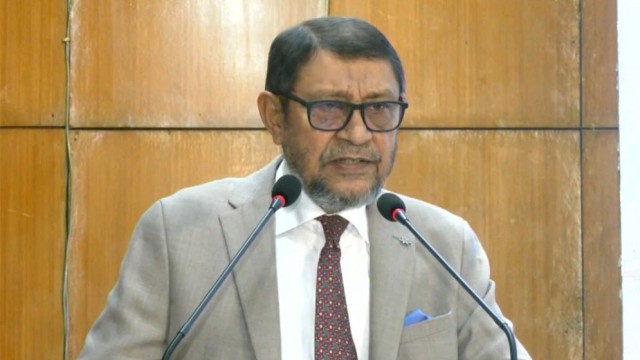
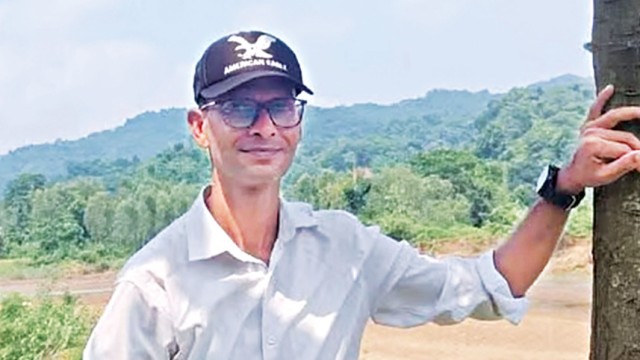
Engineer Md Zakir Hossain Khan, who led the measurement exercise, said the Noise Pollution Rules, 2025 classify areas into five categories: silent, residential, mixed, commercial and industrial.
Under the rules, the permissible daytime noise level is 70 decibels in commercial areas and 50 decibels in silent areas. The readings recorded at Railgate and Laxmipur were substantially higher than these limits.
Khan identified unnecessary honking and noise from battery-powered auto-rickshaws as major sources of urban noise pollution. He said controlling horns and improving traffic management were essential to reducing noise levels, adding that excessive noise also negatively affects urban biodiversity.
Rajshahi has previously drawn international attention over the issue. A 2022 report by the United Nations Environment Programme identified the city as the world's fourth most noise-polluted city, recording a noise level of around 103 decibels.
Four years later, local measurements continue to show levels above 100 decibels at major intersections, underscoring the persistent challenge of controlling noise pollution.
The Barendra Environment Development Voluntary Organisation has been measuring noise levels at important points across Rajshahi since 2022, using similar locations and time schedules to track changes. It has also conducted awareness campaigns, distributed leaflets and organised human chains to highlight the problem.
Environmental activists say awareness campaigns must be accompanied by effective enforcement. They have called for action against unnecessary honking, stricter noise control around hospitals and educational institutions, and improved monitoring of traffic and vehicle noise.
They stressed that cooperation among city authorities, traffic management agencies and law enforcement bodies is essential to reduce noise pollution and protect public health.
END/MRA/SMA/